
An Al Lith trip from Jeddah can mean a quiet mainland coastal stay or an operator-led journey out to sea. Those are different purchases, with different requirements and different return plans. Decide which experience you actually want before arranging a car south. Reaching a coastal town does not place you aboard a boat or establish access to an island.
This guide helps you separate those decisions. It covers the mainland base, selecting and confirming a marine operator, travelling with a mixed party, carrying equipment and arranging the road journey around the actual activity. It does not offer a boat charter, promise marine conditions or confirm that a particular offshore trip is available.
First decide whether the sea stage is essential
Ask yourself what would make the visit worthwhile if no boat outing took place. If you would still enjoy a coastal stay, you can plan the accommodation as the main purpose and keep the marine activity optional. If the offshore experience is the only reason for travelling, confirm that activity before committing to the approach and room.
This is an especially useful question for a mixed group. One person may want diving while another wants time near the sea without participating. A shared road journey does not make the same activity right for everyone. Settle how each person spends the day and how the party reunites. Avoid leaving non-participants with an unspecified plan to wait ashore.
A mainland stay may also be the right decision when the available operator, dates or conditions do not fit. That is a complete trip choice, not a failed version of an offshore holiday. The important point is to choose it deliberately, with accommodation and ordinary journeys that support the experience you want.
Where Al Lith fits on the coast
Saudipedia describes Al Lith as a coastal governorate in Makkah Province, on the Red Sea south of Jeddah along the coastal road network. It identifies Jabal Al Lith among the offshore natural destinations. This provides geographic context; it does not confirm public access, a sailing schedule or the existence of an excursion you can buy on your travel dates.
Use the full name of your accommodation or the operator’s confirmed reporting point for a journey request. “Al Lith coast” covers more than one possible endpoint. A map result for an island is particularly unsuitable as the destination of a mainland car unless the actual road endpoint has been established separately.
Do not confuse the wider governorate with the town centre, a beach facility or a departure location. Obtain an address and a shared location from the host or operator, then check that they describe the same place. Confirm where a car may stop and whether you must walk or transfer again to reach reception or boarding.
Check current travel and operating advice before paying
Read your government’s current Saudi Arabia advice and relevant local information before committing to a coastal or marine itinerary. The UK advice, checked on 27 September 2026, includes regional tensions and potential Red Sea shipping disruption. Other travellers should consult their own government’s guidance too. A bookable room or advertised boat does not settle that assessment.
Discuss the actual location and activity with your insurer, and ask the operator how current conditions affect its proposal. Do not assume a general travel policy covers every boat or underwater activity. This guide cannot confirm safety, insurance eligibility or uninterrupted operation. Follow the relevant authorities and operator’s current instructions if plans change.
Choose the marine provider before the road departure
For an offshore plan, ask who operates the trip, what authorisation covers it and which craft and activity are being proposed. The Saudi Red Sea Authority’s marine tour operator regulation describes licensed operators within its geographical scope. Check the current relevant licence and permissions through the appropriate official channels rather than treating a social-media account as proof.
You are looking for a clear proposal, not just an attractive photograph. It should identify the date, reporting point, activity, inclusions, passenger requirements and return arrangement. Ask whether the provider is operating the activity itself or arranging it through another operator. Know whom you will contact for the final instructions and for any change on the day.
Ask what “boat trip” actually includes
A boat journey, a snorkelling outing, a diving activity and an island landing are not interchangeable descriptions. Ask what you will actually do and which elements are confirmed. Does the proposal include time ashore? Does it offer an activity for non-participants? Is guiding included? Avoid filling gaps with assumptions based on photographs from someone else’s visit.
If a particular offshore place is important to you, name it and ask about the current access and activity arrangements. The operator should explain what it can legitimately provide and what remains subject to conditions. Do not ask a road-transfer driver to organise the sea stage informally after you reach the coast.
Confirm requirements for every participant
Tell the marine operator about the party’s ages, experience and practical access needs where relevant to its assessment. Ask which activity requirements apply and whether documentation or prior experience is needed. Follow the operator’s appropriate screening process. A passenger who can travel in the car is not automatically eligible for every activity offered on the water.
If someone needs individual advice about participating, use the qualified professional the operator’s process requires. Do not rely on a transport article for medical clearance or underwater guidance. You can still make a sensible holiday decision by knowing whether the whole party can participate and what confirmed alternatives exist.
Design the mainland stay around the actual departure
A nearby room can be useful when the marine activity has a reporting arrangement that is awkward to reach directly from Jeddah. Compare the operator’s instructions with your accommodation location and reception arrangements. Ask whether the room and departure point are connected by a provider-supplied journey, or whether you must arrange that stage yourself.
Do not assume “coastal accommodation” means access to a suitable departure point, a usable beach or the activity you want. Ask the host what is actually available and what requires another reservation. If the stay is primarily a mainland break, concentrate on room location, meals, ordinary access and the setting rather than trying to build it around an unconfirmed boat.
Separate a resort reservation from public shoreline access
Where a property or facility controls access, ask about its current arrangements before travelling. A room booking, day visit and marine activity may each have their own conditions. Do not infer that the surrounding coastline is freely accessible in the same way. Obtain the permission relevant to the particular place you plan to visit.
For the distinction between access and transport, our beach planning guide offers useful reasoning from Jeddah. Apply the principle, not an assumed local rule: confirm the facility or activity first, then arrange the car to its actual entrance. Al Lith arrangements need their own current confirmation.
Three plans worth comparing
A mainland stay with no offshore commitment
This design suits travellers whose main aim is time away from the city near the coast. The room and confirmed mainland activities are the core reservations. You can explore marine options only if a suitable operator and activity become available, without making the entire stay depend on them. Budget for the ordinary journeys you actually need.
A confirmed activity with an overnight base
Here the marine booking comes first, and the mainland stay supports it. The accommodation helps you reach the reporting point and gives you somewhere to return afterwards. Ask about the activity’s expected return arrangements and the room access you need. Do not book checkout so tightly that returning later creates an avoidable bag-storage problem.
A same-day approach and return
This requires the closest examination of the whole sequence: road approach, reporting, sea activity, disembarkation and the return road journey. Ask both providers to assess their parts using the same plan. If the combined day is too demanding or sensitive to changes, revise it rather than hoping a very early car departure solves every dependency.
Choose what travels in the car and what travels aboard
The equipment accepted by a road provider may differ from what the marine operator can accommodate. Describe bulky bags and equipment to both. Ask the operator which items it supplies, which you must bring and what should remain on the mainland. Do not travel with an unnecessary large case simply because it fitted comfortably in the transfer vehicle.
If you are using hired equipment, establish where you collect and return it. A collection in Jeddah can alter the starting address or require a separate journey. An item returned after the sea trip can alter the return endpoint. Confirm those obligations with the supplier instead of assuming the car provider can deliver equipment on your behalf.
Our sports equipment transport article explains how to describe awkward items for ordinary road travel. For this trip, keep the road inventory and boat inventory separate. A clear list makes it easier to spot something that fits one stage but needs special handling on another.
Arrange storage explicitly
If some luggage stays at accommodation while you are offshore, ask whether storage is available, who can collect it and when. Keep a record of the arrangement. A checkout date or previous room booking does not automatically authorise leaving bags behind. Confirm collection access if your return from the activity may differ from the original plan.
Keep the booking records and personal items needed for the day accessible in the way the operator advises. Ask about protection from water and baggage handling instead of improvising after boarding. The operator’s instructions should guide the activity bag; the transfer driver should receive the accurate passenger and road-luggage details.
Make the road request match the reporting point
Ask the marine operator for the precise mainland meeting instructions. Use that location, not the name of an offshore island, in the transfer request. Include any entry or unloading directions. If a property or port has controlled access, establish whether the vehicle can reach the proposed handover point and who meets the passengers afterwards.
For a Jeddah Airport arrival, consider whether you are ready to continue into this plan on the same day. An international journey and an operator reporting deadline create a more demanding sequence than leaving from a settled city stay. Our hotel-arrival guide helps with the alternative of checking in before beginning the regional stage.
Describe passengers and bags accurately, including the equipment that remains in the mainland car. The vehicle class guide explains the ordinary choices. A road vehicle class does not establish a boat activity, beach permission or equipment transfer. Seek confirmation for the actual itinerary rather than treating the search as a complete marine package.
Plan the return around the operator’s update
Agree how the marine provider will communicate a changed departure, cancelled outing or altered return. Then discuss how you update the road journey. The car provider may not receive that information automatically. Give one traveller responsibility for passing confirmed changes between the reservations so that drivers are not acting on outdated times.
Ask what the road booking includes if the marine activity ends later than expected. Waiting, a revised pickup and a new journey can be different arrangements. Do not assume indefinite waiting is included or that the two providers share change conditions. Read each confirmation and know its current contact procedure.
Keep an alternative that fits the main purpose
If your main purpose is a coastal break, a cancelled marine activity may leave you able to enjoy the mainland stay. If the boat is the only purpose, you may instead want to change the whole trip. Read the accommodation and transfer conditions before paying so that you understand the implications of that choice.
A substitute boat is not automatically equivalent. It may have a different activity, reporting point, passenger requirement or authorisation. Check the replacement as a new proposal rather than accepting it only because it preserves the date. Do not pressure an operator to proceed when it has decided the conditions or instructions do not permit the planned activity.
A fictional mixed-party decision
Consider a fictional party of four friends leaving Jeddah. Two want an offshore activity, while the other two want a quiet coastal stay. They initially plan a shared same-day road return. Once they ask for the marine proposal, they realise the non-participants’ day and the final meeting point have not been defined.
They compare a shared accommodation base with separate activities against sending only the participants on the offshore trip. The first design gives everyone a confirmed place to return, but needs a room and an appropriate mainland plan. The second avoids taking the others south solely to wait for a boat. They choose based on what each person actually wants.
The example demonstrates a useful planning test: does every member of the party have a complete day, including collection and return? It is not evidence of any available operator or property. A coherent group holiday does not require every person to do the same activity, but it does require their separate arrangements to meet again clearly.
Compare the full trip cost
Keep the road journeys, accommodation, marine activity, equipment and meals visible as separate items unless explicitly included. Record which provider collects each payment and what its change conditions are. This is more reliable than comparing a single boat price with a single taxi quote and assuming the remainder is negligible.
Ask whether non-participants change the proposal or whether the boat booking applies to a whole party. Confirm what happens when the activity changes. The answer should come from the provider’s actual terms; there is no universal rule that a cancelled sea outing automatically refunds a room or road journey.
Compare the mainland day you actually want with the one the proposal creates. If several travellers would spend most of the visit waiting for others, a shared coastal trip may not be the best design. Changing who travels can be more effective than adding another vehicle or searching for a last-minute substitute activity.
Questions before travelling south
Can I book a car first and arrange the boat on arrival?
If the offshore activity is essential, confirm it first. Otherwise you may reach the coast without an eligible or available outing. If the mainland stay is worthwhile on its own, you can keep optional activities open, provided you understand that nothing offshore is guaranteed.
Does a transfer to Al Lith include a marine operator?
Only rely on services explicitly stated in your confirmation. A road transfer does not establish boat admission, activity suitability or an offshore itinerary. Obtain those arrangements from the relevant authorised provider and identify the mainland handover separately.
Can everyone join the same boat activity?
Ask the operator to assess the whole party against its current requirements. Do not assume a child, non-participant or inexperienced traveller can be accommodated merely because another person can join. Confirm alternatives and the return meeting if the group splits.
Arrange the ground stage once the purpose is clear
Start with the Jeddah Cabs route planner for the actual mainland addresses and review the available results. Request confirmation for a regional journey or special arrangement before relying on it. Include your passengers, bags, reporting point and proposed return, and keep the marine booking distinct.
The strongest Al Lith plan is one you would recognise in the confirmations: a mainland stay, an authorised offshore proposal where chosen, and the road journeys that support them. Decide which experience matters first. That makes it much easier to choose a workable car journey without confusing access to the coast with access to the sea.
Official sources and current advice checked on 27 September 2026. Regional conditions, marine permissions and operations can change. Confirm the itinerary with the responsible authorities, operator and your insurer where relevant.
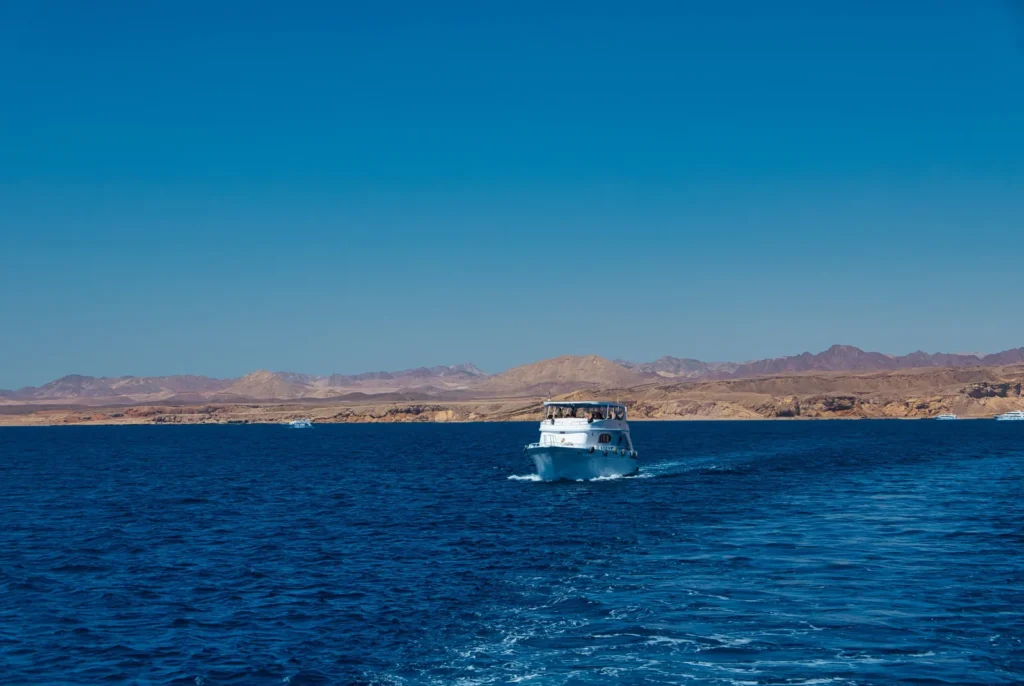
Red Sea marine context photograph; it does not show Al Lith or a vessel supplied by Jeddah Cabs. Photo: Svetozar Milashevich / Pexels, used under the Pexels licence.