
Travelling to Jeddah with your own cat or dog changes more than the luggage list. A room that suits you may not accept the animal, a car that fits your cases may not accommodate its carrier, and a pleasant afternoon outing may leave nobody available to care for your pet. Those decisions belong together before you commit to the stay.
The useful starting question is whether you can build an accepted chain of care, accommodation and journeys for this particular animal. A booking description saying that pets are welcome somewhere does not settle every part of that chain. The owner still needs direct answers from the relevant authorities, airline, accommodation and ground-transport provider.
This guide concerns a privately owned cat or dog accompanying its owner. It does not establish import eligibility, veterinary fitness, assistance-animal rights or a pet-transport service. Jeddah Cabs does not promise that any vehicle accepts animals. Any proposed road journey with a pet needs explicit confirmation before it can become part of your plan.
Make four separate confirmations before committing
Divide your preparation into four decisions: whether the animal may make the proposed international journey, whether your booked stay accepts it, whether each ground journey can accommodate it, and who will look after it whenever you are elsewhere. Approval in one category cannot substitute for another. The family itinerary is workable only when the necessary answers fit together.
Keep a short record of the organisation, the animal described, the arrangement accepted and any unresolved condition. For example, accommodation acceptance might still depend on a particular room or a document you have not provided. Mark that as conditional rather than allowing the word accepted to hide the remaining task.
Decide which unanswered question could stop the trip altogether. Resolve that question before spending effort on restaurant reservations or scenic stops. If the animal cannot travel on your intended flight or the stay cannot accommodate it, a polished city itinerary does not make the underlying plan usable.
Within a travelling household, give one adult responsibility for maintaining these confirmations. Another person can check the practical fit, but contradictory messages to providers make it harder to know which arrangement was actually accepted. Keep the record accessible to the adults accompanying the pet, without circulating sensitive documents more widely than necessary.
Use current official instructions for the animal’s journey
The Ministry of Environment, Water and Agriculture lists visitor services including entry and exit and pet-export permits, and identifies Naama as its unified electronic-services portal. Use the current official service instructions to investigate your animal’s proposed journey; a listed service alone does not confirm your application’s eligibility or approval.
Check the requirements for the actual species, animal, owner and route with the responsible authority. Ask your airline separately about the booking it will accept. If veterinary documentation or travel-fitness advice is needed, obtain it from the appropriate qualified professional. An old online checklist or another traveller’s successful trip cannot settle these questions for you.
Include the return or onward movement in this investigation. Permission relevant to arriving does not automatically answer the arrangements for leaving, an intermediate country or a later flight. Keep those enquiries tied to your intended journey rather than assuming that a short stay needs less preparation.
If you receive unclear or conflicting instructions, resolve them with the issuing organisation before booking dependent services. A transport provider can discuss its proposed road journey, but it cannot approve an animal’s entry, interpret veterinary paperwork on your behalf or guarantee that an airline will carry it.
Describe your pet accurately to accommodation
Contact the actual property handling your stay and describe the cat or dog honestly. Include the number of animals, relevant size information and the intended dates. Ask whether the acceptance applies to the room or unit you are reserving. A broad listing label is a starting point for an enquiry, not the final answer.
Ask what the property means by accepting a pet. Can it remain in the room while you are out, must an owner always accompany it, and are there areas where it cannot go? These are questions for the property rather than general rules this article can supply. Record the answer before choosing an itinerary that depends on it.
Clarify any charges, deposits, cleaning conditions or restrictions in the actual booking terms. Keep pet-related conditions alongside the room price so you can compare complete stays. Do not assume that an acceptance message cancels another condition in the reservation; ask the property to resolve apparent differences explicitly.
Check how you and the animal will enter the property on arrival. If reception wants advance notice or a particular entrance, obtain the relevant instructions directly. A road destination should be the accepted receiving address. The driver is not responsible for negotiating animal acceptance at a property that has never confirmed it.
Separate a suitable room from a suitable whole stay
A room can accept your animal while the rest of the proposed stay remains impractical. Consider whether you can follow the property’s conditions during meals, appointments and outings. If everyone in the household plans to be away together, somebody still needs to decide what happens to the pet during that absence.
Make a simple day plan showing the pet’s location and responsible adult at each stage. This is not a timetable that must be rigid; it reveals gaps that a list of attractions conceals. An unanswered afternoon is easier to solve while considering accommodation than after you have arrived with an animal and several incompatible bookings.
Think about the practical layout you actually need, and ask the property about it without making assumptions from photographs. The suitability of entrances, permitted spaces and arrangements around other guests depends on that property and animal. Do not treat a balcony, garden image or large room as proof of an appropriate animal-care arrangement.
If a stay only works by repeatedly bending its conditions, choose another arrangement or reconsider bringing the pet. Explicit acceptance that your household can follow is more useful than a vague reassurance you hope will survive arrival. Keep personal preferences separate from the minimum conditions needed for a responsible stay.
Ask about the carrier and car before reserving a ride
Describe the animal and its intended travel arrangement when asking about ground transport. State the number of people, all luggage, the carrier’s actual external dimensions and any other relevant equipment. Ask whether the proposed vehicle and provider can accept that combination. The carrier occupies real space even though the animal is not another human passenger.
Use the carrier or restraint arrangement accepted by the competent provider and appropriate advice for your animal. This guide does not prescribe equipment or claim that a particular carrier is suitable. A photograph of a cat in a bag is not technical evidence, and a passenger’s description of a small pet does not establish vehicle fit.
Ask where the carrier can be accommodated and whether any conditions apply to the journey. Do not plan on opening it in a vehicle, holding the animal on a lap or relocating luggage to an unsuitable position unless the relevant safe arrangement has been established. An improvised solution at pickup may require the journey to be reconsidered.
The guide to passenger and luggage fit helps organise the human part of the brief. Add the animal and equipment separately when making an enquiry. A vehicle result or available seat count by itself does not promise acceptance of your pet or its carrier.
Keep the owner with the animal unless separately agreed otherwise
Identify the adult who will accompany and remain responsible for the pet on each proposed road journey. Being the person who paid for a booking is not the same as being available at pickup. If the owner is occupied elsewhere, establish a suitable arrangement in advance rather than leaving responsibility ambiguous between household members.
Do not assume a passenger driver can collect an animal alone, provide care, administer anything or wait as a substitute pet sitter. Those are different responsibilities from carrying an accompanied passenger. If you need animal-only transport or specialised handling, investigate an appropriate provider and its actual scope separately.
Tell the transport provider if the animal described at enquiry differs from what will be present. Additional animals, a larger carrier or a changed travelling party can affect the accepted arrangement. Keeping quiet because the original booking was difficult to obtain increases the chance of an unusable pickup.
At handover, let the responsible adult manage the animal in accordance with the agreed arrangement. Avoid spreading documents, carrier equipment and household luggage across different people without a clear owner. The practical aim is that the pet and its responsible person remain together as you move between accepted places.
Build outings around care rather than assumed access
Choose city outings only after deciding where the animal can appropriately remain. Ask each intended venue about its current policy if you want to bring the pet. A public-looking space, outdoor seating or another visitor’s photograph does not establish access for your animal or settle any conditions at the time of your visit.
The Jeddah Corniche destination guide can help distinguish locations for the human itinerary. It does not confirm pet access, suitable animal facilities or permission to leave an animal anywhere. Treat those questions separately with the responsible venue or authority.
If some household members can stay with the pet, organise their day deliberately rather than treating it as an unwanted gap. A shorter outing for one part of the family may be more workable than taking everybody to a place that cannot receive the animal. Agree how and when responsibility changes between adults.
If using a separate care provider, investigate that provider directly and confirm the accepted animal, responsibilities, receiving arrangements and collection plan. A hotel recommendation does not automatically mean the hotel manages the service. Avoid arranging a road destination until you know who will actually receive the animal there.
Prepare for a stay that changes after arrival
Keep the accommodation contact and its pet-acceptance record available. If staff question the arrangement on arrival, ask the property to resolve the issue before you assume you can enter the room with the animal. The driver cannot settle a booking dispute or make a property accept conditions it has not confirmed.
When a replacement stay becomes necessary, verify its acceptance before selecting it as the next destination. A nearby vacant room may solve your accommodation problem while creating an animal problem. Check both requirements together, including who will receive you and what the pet arrangement means for that night’s care.
Do not leave the animal unattended in a parked vehicle while investigating alternatives. Choose an appropriate supervised arrangement and seek qualified guidance where needed. If you cannot establish a suitable next stage, pause optional plans and contact the relevant property, provider or professional instead of moving repeatedly between unconfirmed addresses.
Once the destination is settled, update the journey brief and ask the transport provider to confirm what can actually be arranged. A change of hotel is not automatically a change the original booking covers. Keep any new acceptance, price and timing attached to the new journey rather than relying on the earlier itinerary.
Keep the animal’s essentials with its responsible adult
Separate the animal’s travel documents and necessary belongings from luggage that somebody else may take to another room or destination. Decide who holds the document record, carrier accessories and supplies identified in your own approved preparation. This is an organisation task, not a substitute for advice about what the animal needs.
Check this division whenever the human party separates. If one adult remains with the pet while another takes the larger cases on an outing, the person staying should still have what is needed for the agreed arrangement. A shared suitcase is convenient until it goes somewhere the animal’s responsible adult cannot reach.
Keep provider instructions available alongside your contacts, particularly if adults alternate responsibility during the stay. Agree which changes require a fresh enquiry rather than a household assumption. A replacement carrier, a different room or another adult collecting the animal may affect an arrangement even when the dates and pet remain unchanged.
Before leaving accommodation for the final journey, review the receiving arrangement again. Make sure the pet’s responsible adult knows where the relevant belongings are and which confirmation applies next. Avoid treating checkout as the end of the animal plan when another carrier, property or authority still controls the following stage.
A fictional household example: solve the afternoon gap
Consider a fictional couple, Noura and Alex, who plan a Jeddah stay with their cat. They have started investigating the required travel arrangements and found a property willing to consider the animal. Before confirming the room, they ask what happens when both adults are out. The answer makes them reconsider their planned long afternoon away.
They decide to alternate some outings so one adult can follow the property’s agreed conditions with the cat. They also investigate a separate care option for a day they both want to leave. That enquiry is still pending, so they do not build the entire week’s itinerary around it being available.
For an accompanied road enquiry, Alex supplies the carrier dimensions together with the couple’s cases. He asks whether the arrangement can be accepted before comparing vehicles. A smaller-looking fare does not win the comparison if its vehicle cannot accommodate the actual party, animal and equipment under the provider’s conditions.
The example illustrates decision order, not a service Jeddah Cabs guarantees. Nobody in it has obtained approval merely by sending a message, and no accommodation or animal-care provider is named. Its lesson is to solve the weakest part of the stay before polishing the parts that already appear straightforward.
Compare the full plan, not just a pet-friendly label
When comparing two stays, use the same questions for each: confirmed animal acceptance, room conditions, absences, access instructions, total booking terms and care gaps. Keep unanswered points visible. A property that answers your actual needs clearly may be easier to plan around than one with attractive photographs but uncertain conditions.
Compare ground journeys on the same basis. The guide to comparing Jeddah transport results explains why different human passenger arrangements need comparable briefs. For a pet-accompanied enquiry, the missing extra question is whether the specific provider has accepted the animal arrangement at all.
Do not blend independently quoted services into a single assumed package. Accommodation, animal care and passenger transport may have different cancellation conditions and responsible organisations. Record what happens if one component changes so you can identify which other enquiries need reopening, rather than expecting one provider to fix every consequence.
Keep a workable alternative proportional to your circumstances. That might mean changing the human outing, choosing a different confirmed stay or reconsidering the animal’s trip after professional advice. It should not mean assuming you can buy immediate acceptance somewhere else once the original plan has failed.
What to send in an accompanied transport enquiry
Provide the actual pickup and destination, proposed date, accompanying adults and children, luggage, animal description and carrier details. Say whether the accommodation or receiving person has confirmed acceptance. Distinguish a question about feasibility from a journey you believe is already booked, especially if several members of your household are communicating.
Ask the provider to identify the accepted scope and any remaining conditions. You need to know whether the particular animal arrangement can be accommodated, what the confirmed journey covers and what happens if your stay changes. Do not request animal-care responsibilities indirectly by describing a lengthy wait as a normal stop.
Keep the reply with the other confirmations and review it if the animal, carrier, party or addresses change. A clear brief helps a provider assess the request; it does not obligate that provider to accept it. You may need an appropriate alternative when the requested arrangement cannot be confirmed.
Use Jeddah Cabs’ route finder to explore the human passenger journey, then request explicit confirmation before including your pet in any proposed booking. Build the stay around accepted arrangements for the animal, its responsible adult and the receiving accommodation, so optional city plans remain manageable.
Source checked 27 September 2026. Government, airline, accommodation and provider instructions may change. This guide gives practical planning questions; it does not approve animal travel or guarantee pet acceptance.
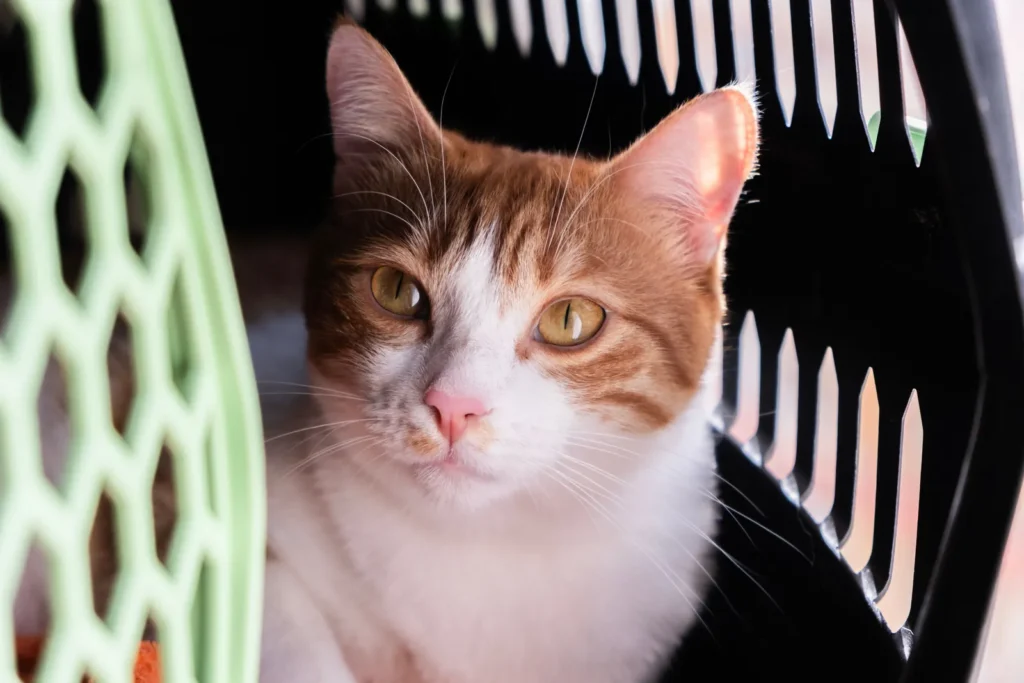
Generic cat-and-carrier photograph, not Jeddah or proof of accepted equipment, permission or a pet-transport service. Photo: Batuhan Küçükdemir / Pexels, used under the Pexels licence.