
A Tayebat Museum visit in Jeddah is easier to enjoy when you choose a focus before deciding how much of the day to fill. The museum is a heritage destination with architecture and collections to explore, not simply another photo stop on an Al Balad walk. Decide what you want to understand, whether you need a guide, and whether a second heritage outing belongs on the same day.
This guide helps visitors organise a focused museum visit from their Jeddah hotel. It covers choosing between architecture, objects and historical themes, checking language and access needs, and comparing one substantial visit with a museum-plus-Al Balad day. Admission, guided services and transport must each be confirmed; this article does not promise fixed opening hours, prices or universal access.
Identify Tayebat before planning an Old Town day
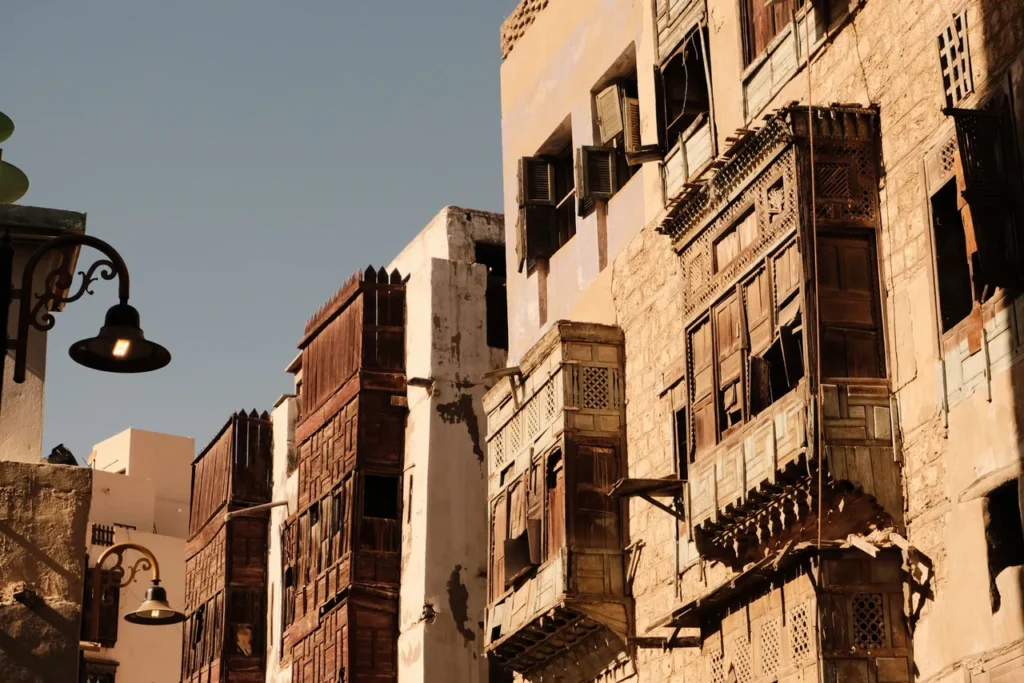
Visit Saudi’s Tayebat Museum introduction identifies it as a place to explore Saudi heritage. Official tourism material places it in Al Faisaliyah, while a Saudi Press Agency museum feature describes architecture recalling Jeddah’s traditional buildings. That is a useful distinction: a building inspired by Old Town architecture is not automatically an attraction inside Al Balad.
Keep the museum’s full name and location in the day’s record. Different spellings, including Tayebat and Taybat, can appear in visitor material. Ask your accommodation or the venue to confirm the intended destination when a map result seems uncertain. Do not replace the museum with an Old Town meeting point merely because both are described as heritage experiences.
Think of Tayebat and Al Balad as two possible visits that can complement each other, rather than a single attraction with two entrances. You may choose one, combine them thoughtfully, or put them on separate days. That choice matters before booking a journey, because it determines where you need to go and what you will be doing on arrival.
Choose one question you want the visit to answer
The Saudi Press Agency’s June 2026 feature on Tayebat’s traditional costumes introduces its Saudi culture pavilion. Its wider museum reporting describes objects, photographs and material about Jeddah and Saudi history. Use those introductions to identify an interest, not to promise that every item mentioned in a publication will be available during your visit.
A useful starting question might be how a port city connects with wider Arabian history, how objects express everyday life, or how traditional buildings make use of decorated windows and balconies. Pick something you can discuss afterward. “We must see everything” gives the family no clear way to decide what deserves attention or when it has enjoyed enough.
Different interests can coexist without producing several separate itineraries. One adult may look closely at building details while another is interested in historical photographs. A child might notice patterns or compare clothing. Agree the main theme first, then let the others become discoveries rather than requirements that the whole party must tick off.
Three ways to approach the museum
Architecture as the main interest
Choose this approach if the buildings and their design are what attract you. Look at the relationship between the exterior and the interior experience rather than treating the entrance as the entire visit. Ask the venue which areas form part of current admission and which can be viewed under its photography and access rules.
For an architecture-focused family, curiosity can start before entering: what looks decorative, what seems to frame an opening, and what details repeat? You do not need to identify every feature correctly to enjoy looking. Avoid turning an observation into a historical claim unless a display, guide or reliable source explains it.
Objects and everyday life
Choose this when your group prefers tangible things to a broad chronological account. A small number of objects can support a better conversation than trying to memorise a large collection. Ask what a display says about the object’s use, who might have used it and what remains uncertain. A beautiful object does not explain its history by appearance alone.
With children, compare something unfamiliar with an everyday object they know. Let the comparison open a question instead of declaring that people in the past all lived one way. Museums can show particular examples without representing every community or period. This approach makes the visit thoughtful while keeping the reading task manageable.
A guided historical introduction
If you want help connecting the material, ask about a guided visit for your date and language. Establish whether the service is offered by the venue or a separate tour provider, what it covers and how it is arranged. A driver’s ability to speak a language does not establish that the transport booking includes a museum guide.
Tell the guide or seller what interests your party and whether children or older relatives are attending. Ask how questions and a slower pace can be accommodated. Do not assume a private group automatically receives an unlimited visit or every language. Choose the confirmed service that fits the group rather than the broadest label in an advertisement.
Use the Historic Jeddah material to connect the two visits
A Saudi Press Agency account of the museum’s Historic Jeddah pavilion describes representations of neighbourhoods and material about markets, trading houses and Jeddah’s port receiving pilgrims. That gives a combined museum and Al Balad day a useful connecting theme: the relationship between streets, commerce and arrivals, rather than simply visiting two attractive places.
Ask your guide which current displays explain that theme and distinguish a representation from an original object. Later, during a confirmed Old Town walk, ask what the buildings and streets you can actually see add to the explanation. The museum and the district can inform each other without requiring you to assume every reconstruction is a surviving building you will find outside.
Keep a museum visit and a packaged tour distinct
If you are considering a package that combines Tayebat, Al Balad and transport, check its seller, itinerary and conditions separately. A package’s inclusion of a museum does not mean those services come with an independent taxi booking or with every direct museum admission.
If buying a package, check who provides admission, guiding and transport, and which details will be sent before the visit. Read the exact product description for the date and party you are booking. This guide does not adopt another seller’s schedule, seating arrangements, cancellation policy or promises as Jeddah Cabs terms.
If arranging the day yourself, write admission, guiding and journeys as separate items. That helps you see what is already confirmed and what still needs an answer. A museum contact may help with visitor questions but is not automatically managing your return car. Likewise, a journey confirmation does not resolve an unanswered museum admission question.
Opening information needs a current answer
Use the current destination introduction as a starting point and verify the intended visit with the venue or your actual seller. Older guides and different language pages can present different opening details. Do not choose an exact arrival time solely from a timetable copied into an old travel article.
Ask whether the museum can receive your party on the chosen date and whether a guide requires an appointment. Establish any admission or final-entry instructions relevant to your arrangement. A building being open does not prove that the particular guided service you want is available whenever you arrive.
Keep the answer with the admission or appointment details. If you are adding another activity, confirm that the museum visit fits before committing to a second fixed start. The practical aim is a clear day, not a timetable assembled from several sources that each describe a different season or product.
Choose a language that makes the visit worthwhile
Ask what explanatory material or guided service is available in the language your group understands. A translated website does not establish the language of every label or visit. For a mixed-language family, decide who will help with a short explanation and whether a venue guide would make the experience easier.
There is a difference between translating a word and explaining an unfamiliar historical idea. Give children or relatives time to ask what a term means. If a display’s context is unclear, record the question for a guide rather than making up an answer. A visitor can leave with an interesting question as well as with a new fact.
For an arranged group, settle language needs before the final confirmation. “English, with a little help for our Urdu-speaking grandparent” describes a real requirement; “any language” does not. If the offered arrangement cannot support the people attending, reconsider it before paying rather than expecting another visitor to translate throughout.
Access questions should describe the full visit
Explain mobility needs in practical terms: a wheelchair, a walking frame, difficulty using stairs or a need to sit regularly. Ask which parts of the intended visit can be reached and what route is proposed. Conflicting general accessibility labels are a reason to get a specific answer, not a reason to promise that every space is accessible.
For somebody who can walk a short distance but struggles with standing, the discussion may differ from a wheelchair user’s. Ask about the actual movements and breaks the chosen visit involves. Do not infer seating, assistance or companion admission from a broad family-friendly description.
The journey has separate requirements. Give the transport provider the equipment details and any boarding needs. Ask about a suitable permitted drop-off and the route from there to the entrance. Even when a museum arrangement is appropriate, the car and the approach to the venue still need to work for the person using them.
If important questions remain unanswered, a shorter confirmed experience or a different day can be the better decision. Do not arrange a complicated visit on the assumption that relatives can carry somebody or solve unexpected stairs. Choosing a suitable visit is part of hospitality toward the family members travelling with you.
One museum or Tayebat plus Al Balad?
A museum and a historic district offer different ways of learning. At Tayebat, displays and an arranged explanation can help connect objects and themes. In Al Balad, the experience is a particular district with streets, buildings and any separate venue visits you choose. Combining them should add understanding rather than merely add two names to a list.
Choose a combined day when the party actively wants both and the arrangements can be confirmed without rushing. Give each visit a purpose. For example, you might focus on objects in the museum and architectural observation during a guided Old Town walk. Do not make a long museum visit and a long walk the default for someone who wants a gentler day.
Choose separate days when interests or energy levels differ. A museum-focused morning or afternoon can stand alone. Our Al Balad visit-planning guide helps decide where an Old Town outing belongs in your stay. Keeping it separate may also make each visit easier to rearrange if one admission or appointment changes.
Build the journey sequence from confirmed addresses
For a single museum visit, the sequence is your actual hotel entrance, the confirmed Tayebat destination and the agreed return. If you add Al Balad, identify where that second visit begins and where it ends. A district name alone is not a complete meeting-place instruction for an independent walk or guided tour.
Ask about transport for the sequence you intend, including the dates and people on each leg. Do not assume that buying a museum ticket reserves a car between attractions, or that one hotel transfer keeps a driver with you through the day. Waiting, stops and return arrangements need their own confirmation.
Our guide to transfers for a Historic Jeddah guided walk addresses that particular meeting-point task. Use it for the second outing rather than asking a museum driver to guess a guide’s location. Save the current version of the day’s sequence so everybody shares the same plan.
Prepare children without turning the visit into homework
Invite children to choose a small observation: a pattern on a window, an object they would like explained, or a difference between two images. Keep the invitation open. They might find something else more interesting, and the visit can still succeed. A lengthy list of questions can distract them from the things in front of them.
Agree which adult is responsible when interests pull the group apart. Someone reading a display should not assume another adult is supervising simply because they are nearby. Choose a way to reunite that follows the venue’s rules. Keep the day bag, contact information and ticket records with an adult who can reach the others.
Plan rest and food outside the exhibition task unless the venue confirms an appropriate arrangement inside. Ask about bags and pushchairs before bringing them. Adding an airport suitcase because the museum comes before a flight requires a confirmed storage and onward-travel plan; it should not be improvised as part of a family visit.
Photography is a separate permission
Check the venue’s current rules for photographs, flash, equipment and any restricted displays. Being admitted does not mean every object or space can be photographed. Follow signs and staff instructions even if images taken by previous visitors appear online. Keep other visitors’ privacy in mind when composing a photograph.
A small number of thoughtful images can be more useful afterward than hundreds without context. If photography is allowed, note the display’s explanation in your own words so you remember what interested you. Avoid describing an object as ancient or ceremonial merely because it looks elaborate; use the explanation actually supplied.
A worked example: choosing depth over a crowded day
Consider a fictional family with two adults, a teenager and an older relative staying in Jeddah. They initially want Tayebat, an Al Balad walk and several other sights in one day. The teenager enjoys architecture, while the older relative wants explanations about objects and needs regular rests.
They first identify their shared museum interest and ask about a suitable guided arrangement and route. Once the language and access answers are clear, they decide Tayebat deserves its own outing. The Old Town walk moves to another day, with its own meeting place. They do not treat reducing the list as losing part of the holiday.
The museum admission and guide confirmation sit beside the transport record, rather than being merged into one assumed package. The hotel pickup uses the real entrance and the equipment their relative needs. The return is arranged around leaving the venue and reaching the meeting place, not around an unverified estimate of how long every visitor spends inside.
Afterward, each person can name something they noticed or learned. The value of the example is a workable decision process, not a timetable or a promise about facilities. The family has selected the visit it wants and checked what it needs, rather than relying on a long list to make the day feel complete.
Take something useful from the visit
Afterward, ask each person which detail stayed with them and why. An observation about a window, a photograph or an everyday object can lead to a more interesting discussion than comparing how many rooms everyone saw. Separate what a display explained from your own interpretation when sharing the visit with relatives.
If a question remains, keep a short note for further reading rather than resolving it from memory. A museum visit can be an introduction to a subject without making you an expert on it. That attitude also makes a later Al Balad outing more rewarding: you arrive with something to notice and ask about, rather than expecting every building to confirm a story you have already decided.
Before confirming your Tayebat outing
- Confirm the correct museum destination and chosen date.
- Pick a main interest instead of trying to cover every theme.
- Check admission and any guide or language arrangement.
- Resolve essential mobility, bag and equipment questions.
- Decide whether Al Balad adds value that day or belongs on another.
- Keep each venue and journey confirmation separately available.
- Agree the return destination and meeting place before leaving.
For a broader comparison, read our Jeddah museum visit and transport guide. Once Tayebat is your confirmed choice, explore Jeddah Cabs journey options using the actual hotel and destination. Check the offered details and ask about essential requirements before booking. A focused heritage visit gives the journey a clear purpose and leaves room to enjoy what you discover.
Planning sources reviewed 27 September 2026: Visit Saudi’s Tayebat destination information and Saudi Press Agency museum reporting. These describe the attraction; current admission, guiding and access arrangements require confirmation for your date.
Al Balad architectural context photograph; it does not show Tayebat Museum. Illustrates the heritage comparison discussed in the article. Photo: abdullah alallah / Pexels, used under the Pexels licence.